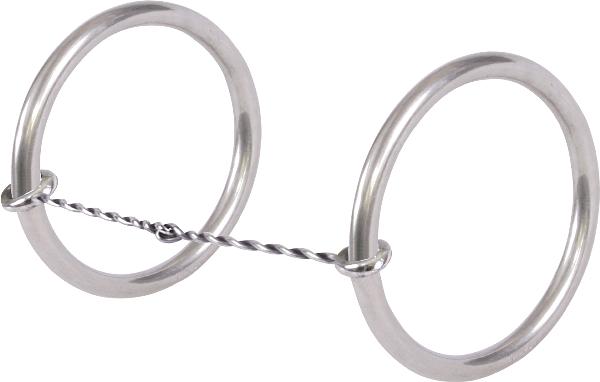
Over the years I've found that leverage bits on average have a bad/harsher wrap when it comes to public opinion. Many people consider it a point of pride to ride in snaffle over a curb. But what most people do not realize is that comparing a snaffle to a curb is like comparing chicken to pigeons.
To refresh your memory on snaffle bits and mouth pieces please check out- http://knptraining.blogspot.com/2012/07/bits-and-bitting-part-4-truth-about.html
According to "A Whole Bit Better" by Dale, Ron, and Bob Myler a curb bit consists of shanks "of two or three rings, one at the top of the bit for the headstall/bridle and one or two at the bottom for the reins, attached to a length of metal in between where the mouth piece is attached. A curb strap or chain is attached to both shanks."

"Shanks can be straight or curved, long or short, or any variation thereof. The length and shape of the shank determines how much pressure will be communicated to the horse. Shanks are categorized as quick, offering more direct pressure to the horse with light pressure on the reins, and slow, offering a more subtle signal to the horse with pressure on the reins."


The shank on a curb bit amplifies the pressure exerted by the rider. So if a standard curb bit has a 1 1/2" cheek and a 4 1/2" lower shank there is a 1:4 ratio of cheek to full shank. So when 1 pound of pressure is applied to the reins 4 pounds of pressure will be felt in the mouth. The slope of the shank also affects the amount of pressure applied.

(source: Horse-Pros.com)
The mouth pieces of both snaffles and curbs can be the same and can work off the bars, tongue, and soft pallet.


So if both snaffles and curbs can use the same mouth pieces why have a curb bit in the first place?
Where a snaffle bit is a direct rein meaning if you want to turn left you pull on the left rein and is generally used with two hands a curb bit is a indirect rein bit that allows the rider to use. With more leverage a rider is also able to use lighter cues.
A stronger bit is never a substitute for training, and no one bit is right for every horse. A curb should be used on horses who already comfortable in the bridle and also work off seat and leg pressure . A curb bit is best suited for a finished or nearly finished horse which is best defined below.
"The ultimate goal with riding and training horses is to have a finished or broke horse. The finished horse will do what you ask, willingly and relaxed. He'll go wherever you direct him. He will always try. He has enough confidence in the rider to trust that he won't be put unto a situation that will hurt him. To be considered finished, a horse needs to be relaxed in the bridle. In the bridle means that the horse is broke at the poll with his head set on the vertical. He's supple and giving to the hands and his head stays in position with little or no contact. When a horse is broke at the poll you can feel it. He's got his shoulders up, he's round through his back, engaged through the hind end and balanced underneath you. It's a wonderful feeling for the rider. You can gather him up to collect, release and he stays in position. No matter the level of training, a horse should always be relaxed in the bridle. Always."- A Whole Bit Better by Dale, Ron, and Bob Myler