Our hope is to try to raise overall biting awareness. Showcasing how these bits are interacting with the mouth, hopefully help horses avoid common/chronic mouth problems caused by bits and their placement, and offer more humane biting options and solutions.
This is a 14 year old gelding primarily used for barrel racing.


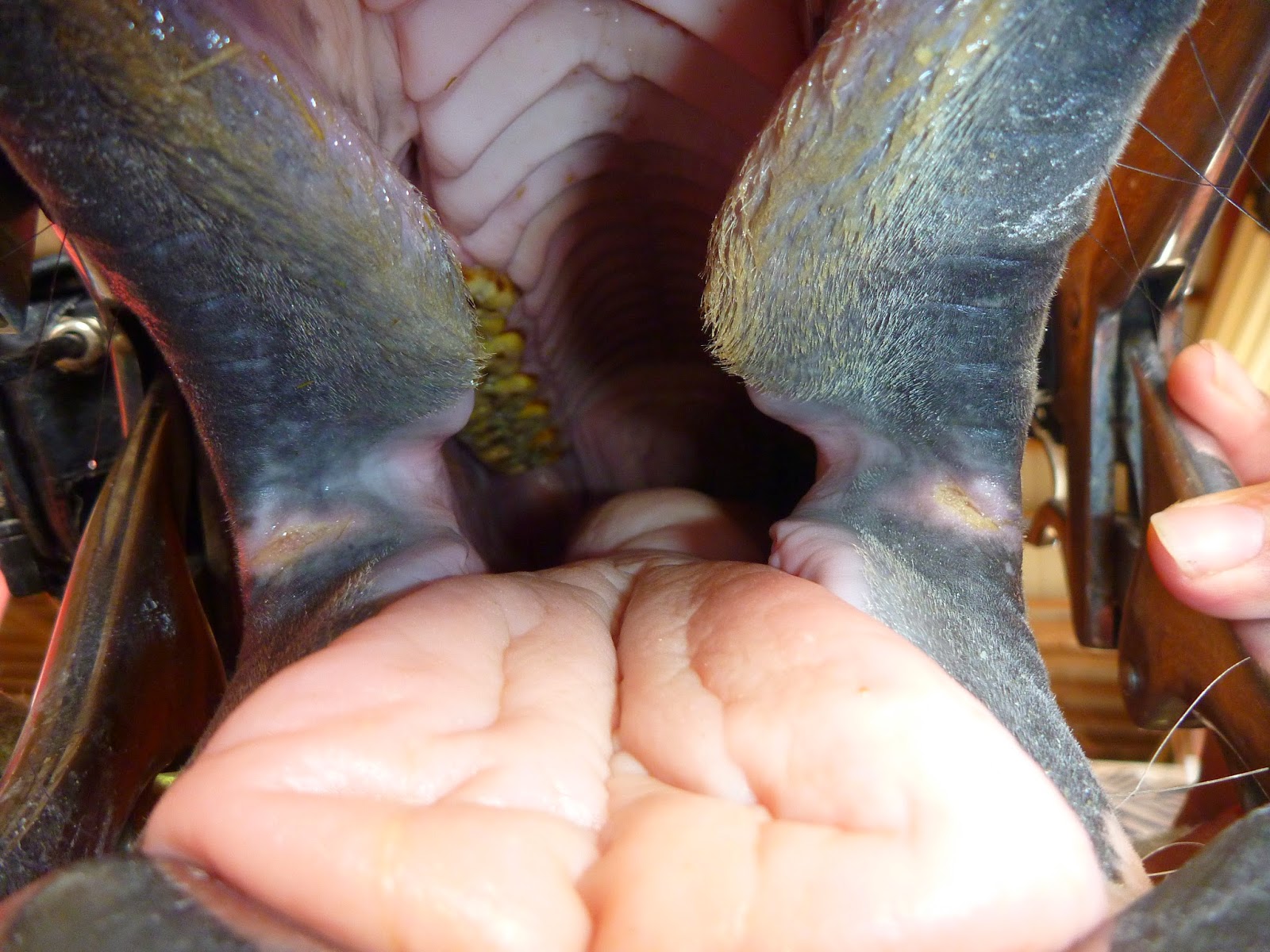

This bit is about an inch (at least) over a normal bit placement. A mouth piece should sit just in the mouth crease maybe a wrinkle, at the most a wrinkle and a half. Anytime the rider touches the reins the bit is going to engage an 1 to 2 inches further into the back molars. In addition to the straightness of the purchase and shank this horse is set up to really feel the slightest touch.
The loose ring on the mouthpiece provides a twisting pinch to the crease where his ulcers are.
I can see that the mouthpiece is twisted/grooved providing less surface area on the bars and tongue thus more responsive/more painful. (I like explain it by comparing a rail to a bench. The 2" rail having less contact on your rear is going to make your butt hurt a lot faster when you sit on it).
While I do not have a picture of just the bit I am 99% sure this is a dog bone mouthpiece which offers absolutely no tongue relief and slams on the bars, but cannot come into contact with the palate like a really straight snaffle/jointed mouthpiece.
And the tongue seems depressed where the mouthpiece would be in play when you study the 3rd picture.
The Solution:
Using a bigger bit (or using one in this way) is never a substitute for training. Ideally I would want to get this horse in another bit as quickly as possible and instead go back and reassess his training program to fix the holes in his stop and steering before racing him further.
But this horse's riding life could greatly be improved by lowering the bit to a normal position in the mouth and by adding bit guards to protect against pinching effect of the loose ring mouthpiece.
If you would like to submit your horse/bit for future analysis contact me here.
